


Many automotive plastic parts are made by injection molding, during the injection molding process, defects such as weld marks, gas marks, and deformation are prone to occur; high-gloss traceless molds can solve the above defects. Let’s take a look at the eleven major elements of high-gloss traceless injection mold design.
A. The principle of high-gloss traceless injection molding
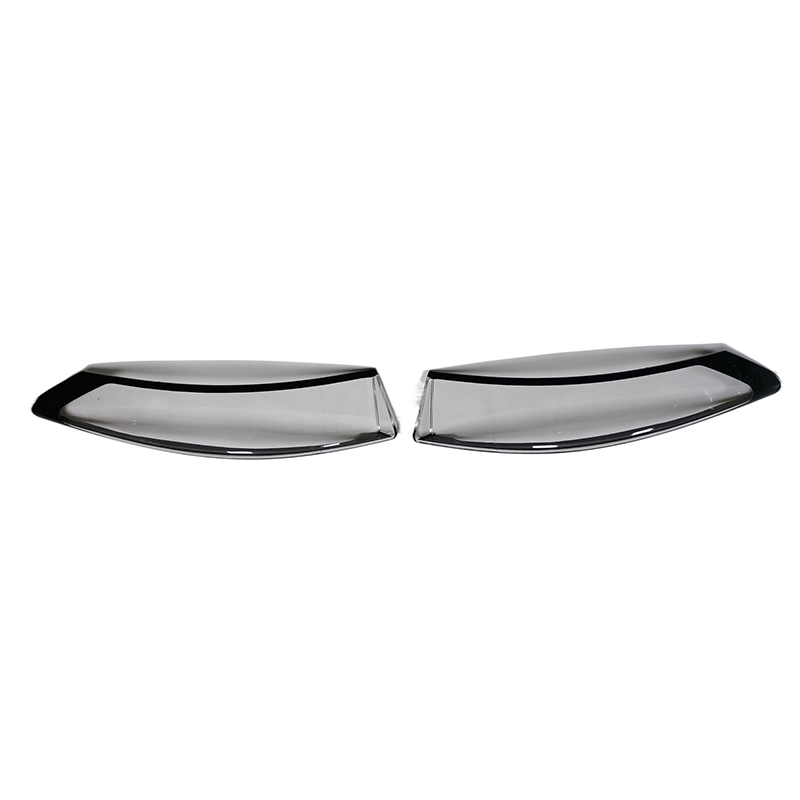
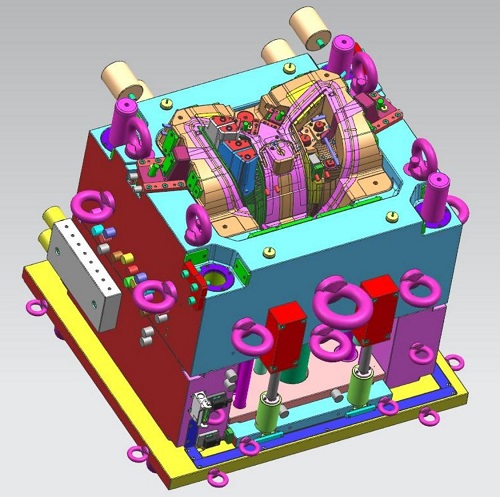
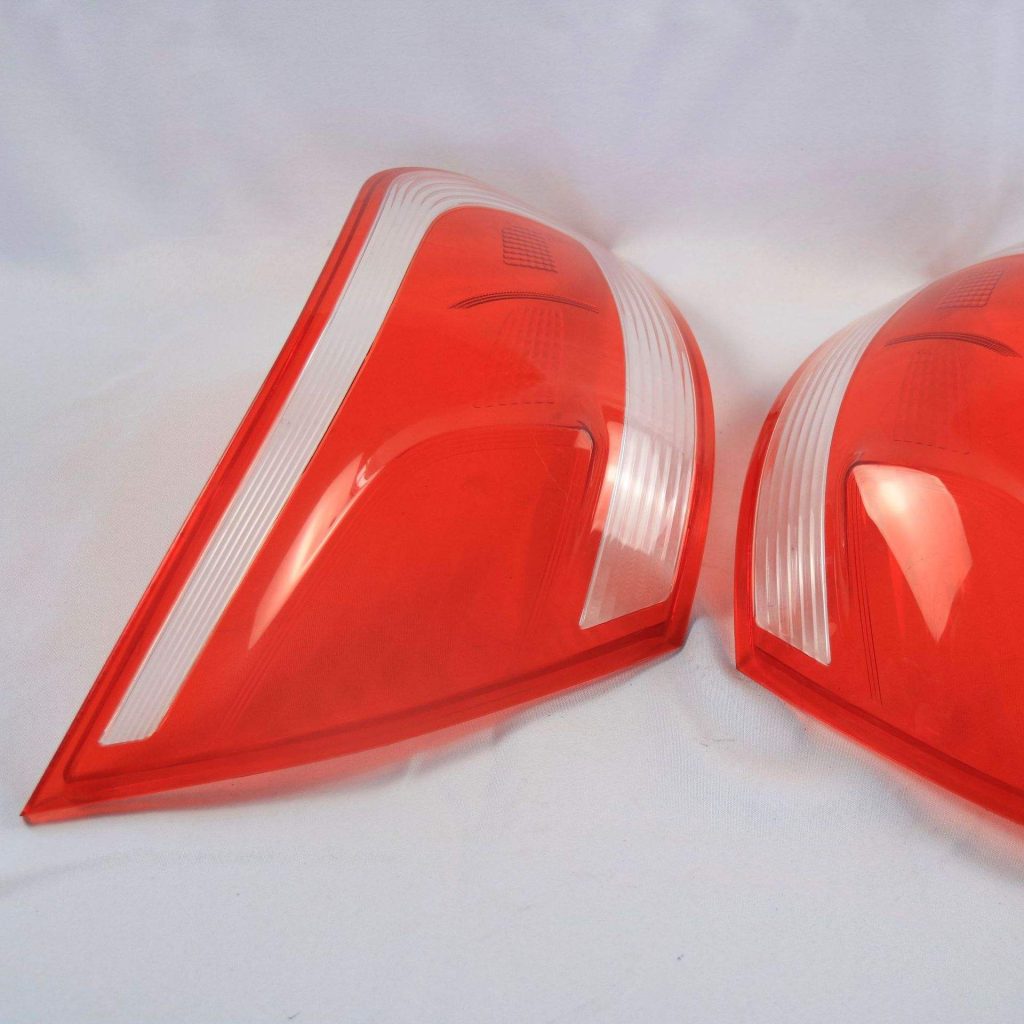
1. High temperature mold molding has high temperature requirements (generally around 80℃-130℃). After the injection molding enters the pressure holding stage, cooling water is used to reduce the mold temperature to 60-70℃. Pressure holding molding at a higher mold temperature is conducive to eliminating defects such as weld lines, flow marks, and product internal stress. Therefore, the mold needs to be heated during operation. In order to prevent heat loss, an insulation board is usually added to the fixed mold side.
2. The surface of the mold cavity is extremely bright (generally mirror grade 2 or higher). The products produced by the high-gloss mold can be directly used for installation (assembly) without any surface treatment. Therefore, it has high requirements for mold steel and plastic materials.
3. There are many hot nozzles in the hot runner system. Each hot nozzle must have a sealing needle and an independent airway. It is individually controlled by solenoid valves and time relays to achieve time-sharing glue feeding, so as to achieve the purpose of controlling or even eliminating weld marks. The control method is complex.
4. Heating method There are usually two ways to heat the mold: steam (hot water) heating and electric heating rod (tube) heating. The steam (hot water) heating method is to input steam (hot water) into the mold during the injection process through a specific temperature controller, so that the mold can be heated quickly; after the injection, the mold is cooled with cold water to cool the mold quickly. The electric heating method and the water heating temperature controller are the same in principle, but the heat source is different. Electric heating is a secondary energy source, and water heating is a tertiary energy source. In principle, electric heating has less energy loss, high utilization rate, and good energy-saving benefits. It is easy to use, so: if it is a flat (surface) product, it is more economical to use electric heating.
B. Automotive high-gloss injection molds materials
1. Mold materials for product surface with normal requirements can be: NK80 (Datong, Japan), etc.;
2. Materials for high gloss requirements can be: S136H (Sweden), CEANA1 (Japan), etc.;
3. NK80 does not need quenching treatment; S136H should be quenched to 52 degrees after rough processing; CEANA1 itself has a 42 degree and does not need quenching treatment (it is recommended to use this steel because it does not affect subsequent processing or modification);
4. There are also good choices among the German Gritz brands: CPM40/GEST80.
C. Automotive plastic mold water channel design
1. Design of water channel aperture size The water channel adopts an aperture of 5-6mm; the water nozzle uses 1/8 or 3/8 thread (mold side), and the other side uses 3/4 British thread (old-fashioned connection method); the pipe material is stainless steel pipe; now we change it to one inlet and one outlet, and the diversion port is best made in the automotive plastic mold, and the interface uses DN25 connection, so that the heat energy loss is small, the operation is convenient, and the interface is convenient.
2. Product surface design The water channel is generally 5-6mm away from the product surface; a larger one will affect the mold heating time, and a smaller one will affect the strength of the mold. The water channel parallel to the product surface needs to be evenly arranged (15mm equal distance distribution in the center of the original material) Thermocouples should be designed in the middle of the two water channels, with a depth of more than 50mm and a maximum of no more than 100mm, depending on the mold structure and flexible control. Each set of mold PT100 is one-to-one, to maintain its accuracy, it must be inserted into the mold cavity and fixed. Use a lead wire to connect to the outside of the mold, and then connect to the temperature controller socket.
3. Mold water channel joint design The mold water channel joint must be designed at the upper and lower sides or the rear side of the mold; the operation side (standing side) is not allowed to have water channel inlet and outlet or water pipe arrangement to avoid pipe rupture and injury to production personnel. Remember!
4. Mold inlet and outlet nozzle design The mold inlet and outlet nozzle adopts a splitter design, and the hydrothermal mold temperature controller system has only one inlet and one outlet interface to reduce excessive water pipe connections and reduce unnecessary heat energy loss; and achieve the purpose of energy saving. And the surface of the corrugated pipe is wrapped with thermal insulation tape to play a role in heat preservation.
5. Mold construction holes The construction holes of the mold (unwanted holes) should be blocked with plugs to ensure that there is no air leakage or water leakage. The method is to first use copper plugs, and then use tapered throat teeth and high-temperature resistant glue to seal; high-gloss molds are more particular about the arrangement of cooling water channels (hydrothermal mold water channels are shared). Good water channel arrangement can not only greatly improve injection molding efficiency, but also play an important role in improving product quality. The water channel of the high-gloss mold must not only be uniform but also sufficient (there must be enough).
This will quickly heat up the mold; at the same time, using an extended water pipe to directly transport water out of the mold core instead of using a sealing ring can prevent the mold from operating at high temperatures for a long time, causing the sealing ring to age, and can also reduce the maintenance cost of many molds. It is worth mentioning that the water pipe of the high-gloss mold must be made of a high-temperature resistant material (250℃) corrugated pipe.
High-pressure 1.6Mpa corrugated pipes are used to prevent water pipes from bursting under high temperature and high pressure. For round products, circular water transportation is used; for long strip products, parallel water transportation channels are used. For products with large height differences, water wells are used; for special-shaped products, a three-dimensional water transportation method consistent with the product appearance is used.
Guangdong Yuanfang Technology is committed to providing automotive injection mold manufacturing services for customers in the automotive, power tools, home appliances, digital and medical equipment industries. sales@yuanfang.com looks forward to your consultation and starting our cooperation.
 German
 English
 Spanish
 French
 Italian
 Portuguese
 Japanese
 Polish
 Arabic
 Korean
 Russian
 Chinese